Documenting a Village Festival: A Photo Story Checklist
October 29, 2026 - Local Stories

October 29, 2026 - Local Stories
Walk into a hill village an hour before sunset and the street starts doing the work for you. Light comes off a wall of pale lime plaster, crosses a two-metre alley, and lands on the opposite wall, picking out a stone sill, a geranium in a tin pot, a rusted downpipe. Nobody arranged it. The picture is already there. You just have to stand in the right place and not ruin it.
This is why village walls reward a certain kind of patience. They are not blank surfaces waiting for a subject; they are the subject. Plaster, stone, paint, and the way all three handle light are the reason a photograph taken in a Puglian alley at nine in the morning can feel completely different from one taken in an Alpine hamlet at the same hour. Learning to read those surfaces is most of the craft.
Lime plaster is the great unsung tool of street photography in Italy. Applied over stone or brick, built up in coats, patched and repatched across decades, it produces a surface that is almost never truly flat. Trowel marks, hairline cracks, the ghost of an old doorway filled in and painted over—all of it catches light at slightly different angles.
More importantly, a whitewashed wall is a reflector the size of a building. In a narrow street, it throws soft, warm light into places the sun never reaches. That is why the shadow side of an Italian alley often looks luminous rather than muddy.
The practical consequence: protect your highlights. Meter for the bright wall rather than the whole scene, or check the histogram and pull exposure down until the whitewash still has detail. A blown-out wall is a wall with nothing left to look at.
At midday, plaster shows texture: every ridge and repair reads clearly because the light is hard and comes from above. In the late afternoon it shows shape instead, as the wall softens and the shadows of chimneys and roof tiles slide across it. Both are worth shooting. They are not the same photograph.
Municipalities do not choose their geology, and that is a gift. The honey-coloured tufa of Pitigliano and Civita di Bagnoregio looks nothing like the grey slate and gneiss of an Alpine village, and neither resembles the warm limestone of Noto. Stone is a location marker you can photograph.
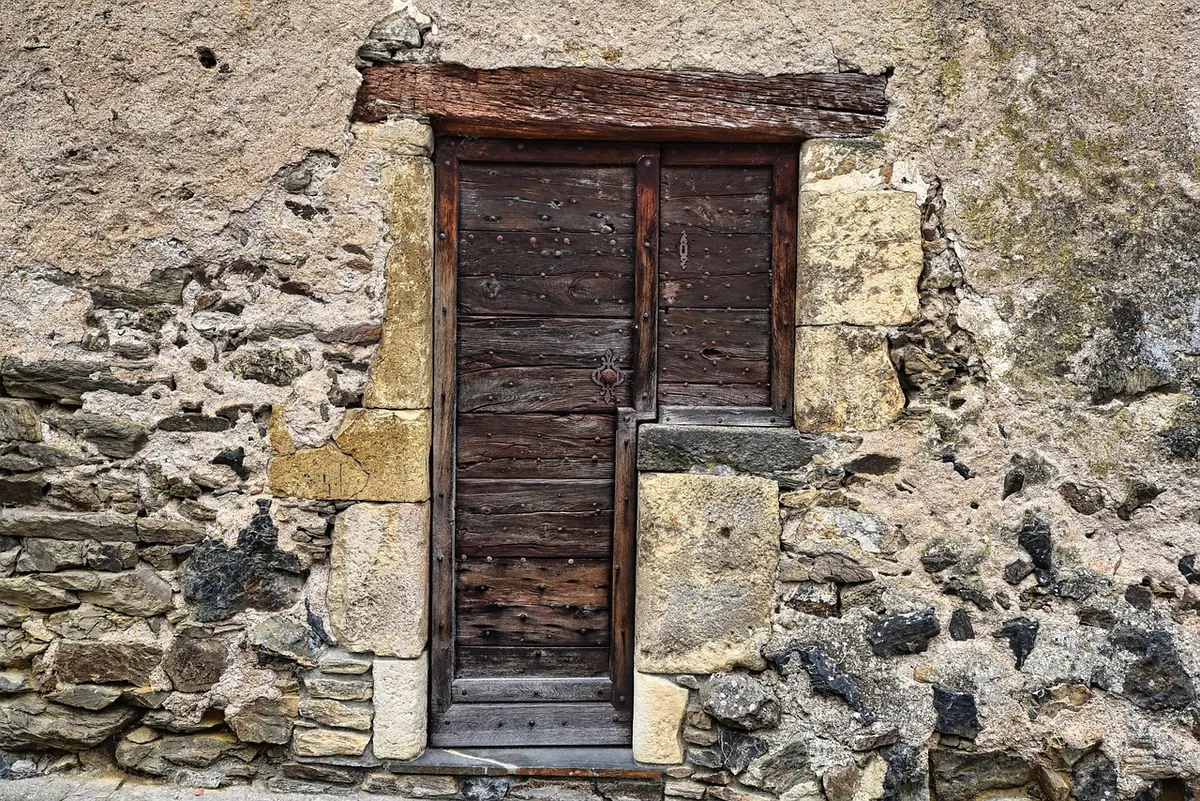
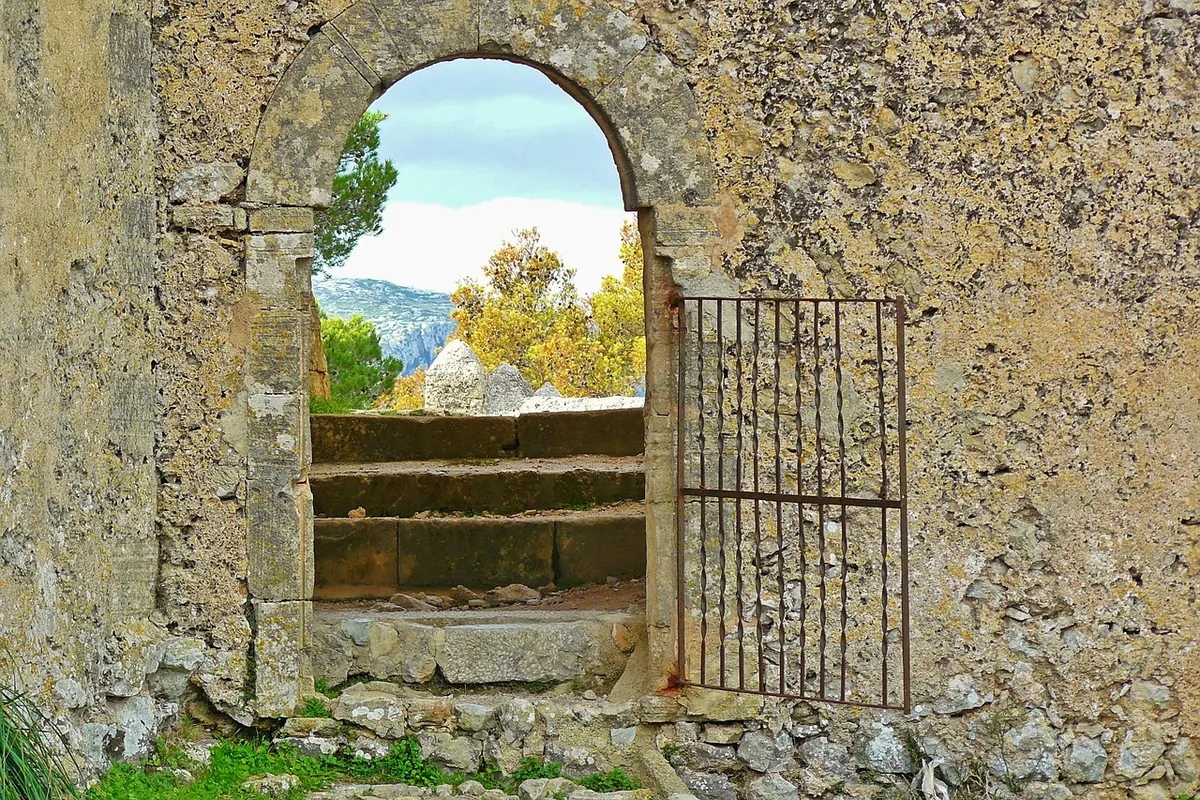
Look for the joins. Mortar lines, dressed blocks, rubble infill, a course of brick inserted during a repair, a threshold worn into a shallow bowl by three centuries of feet—these details are where the texture lives. Get close with a normal or short telephoto lens and let the frame fill with wall. A single square metre of old masonry can carry an entire image.
Raking light is your ally here. When sun strikes stone at a shallow angle, every pit and joint throws a small shadow and the surface becomes legible. Flat, frontal light flattens it into a pattern. If the stone looks dull, move along the street until the light comes in from the side.
Italian villages are not colourful in the way that tourist brochures suggest. They are usually restrained: ochre, faded sienna, dusty rose, a great deal of cream and grey, and then one saturated interruption—a green shutter, a blue door, a red awning. That restraint is exactly what makes the colour work in a photograph.
When you find a strong painted wall, resist the urge to fill the frame with it. Give it a neutral partner: a stretch of grey stone, a whitewashed return, a patch of sky. The eye needs somewhere to rest, and the colour reads stronger when it is not competing with itself.
Warm plaster in direct sun pushes your camera toward orange. Shadows in the same alley, lit only by blue sky, pull toward cyan. Auto white balance will try to average the two and often produces something muddy. Pick a reference—a neutral grey stone, a white shutter—and set it manually, or accept the warmth deliberately and shoot a little cooler than feels natural so the plaster doesn't turn to marmalade in editing.
Painted facades in Liguria, particularly the trompe-l'oeil work around Camogli, add another layer: painted windows, painted cornices, painted shadows that are not shadows. Photograph them straight on, square to the wall, so the illusion reads. Shoot them at an angle and the trick collapses.
Many village lanes are two metres wide and five storeys tall. Direct sun never reaches the pavement. What you get instead is a light well: sun hits the upper wall, bounces down and across, and fills the street with a soft, directional glow that changes minute by minute as the sun moves.
This is the best light in the village, and it is easy to misjudge. It looks dim to the eye because your pupils have adjusted, but the contrast between a sunlit upper wall and a shadowed lower one can be four or five stops. Expose for the brightest area you care about and let the deepest shadows go dark. A little black in the frame gives the light somewhere to push against.
Two things worth trying:
There are two photographs in every village street, and beginners usually take only one. The first is the view: the alley receding, the arch at the end, the pot of basil. The second is the wall itself, treated as a flat plane—texture, colour, a rectangle of shadow, a window frame dividing the surface.
Work both. Start flat, square to the wall, and see whether the geometry holds up on its own. Then step back and build depth: a doorway as a frame within the frame, a staircase breaking the vertical, a person walking through the pool of light at the far end. Human scale matters more than you think in a village—without a figure, a doorway could be a cathedral door or a cupboard.
Keep your verticals vertical. Old walls lean, but they should lean because the building leans, not because your lens did. Step back, raise the camera to chest height rather than tilting it up, and use a wider lens only when you have room to keep it level.
The temptation with Italian walls is to push warmth and saturation until the picture looks like a travel advert. Don't. Old plaster is mostly grey-white with hints of other things; stone is often cooler than you remember. Bring back the highlight detail, keep the shadows slightly cool, and let the one real colour in the frame do its work. Crop tight when the surface is the subject, and leave air when the street is.
Then put the frames side by side. A set of six walls from one village—plaster, tufa, painted shutter, worn step, reflected light, a figure passing—will say more about the place than any single wide view. The walls were doing the talking all along. Your job was simply to wait for the right hour and stand in the right spot.
Photo: lecreusois / Pixabay
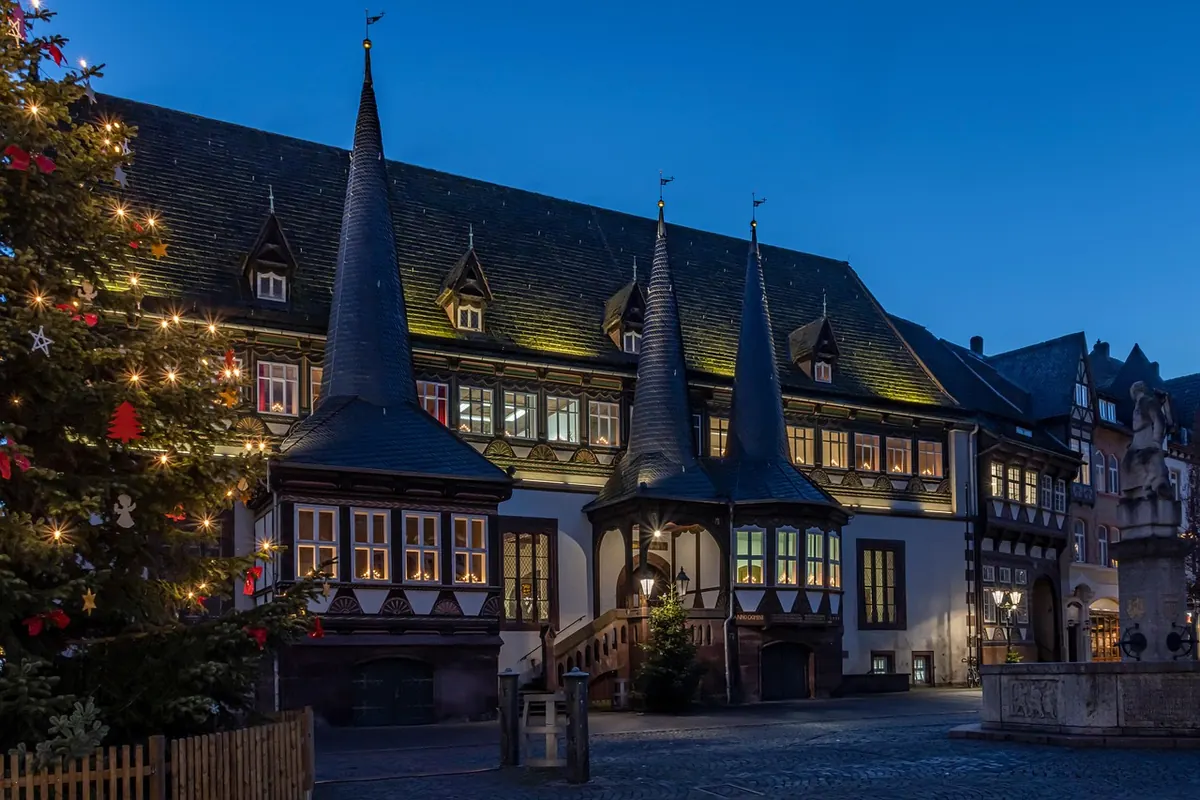
A practical checklist for photographing a village festival — from permissions and route scouting to key moments,...
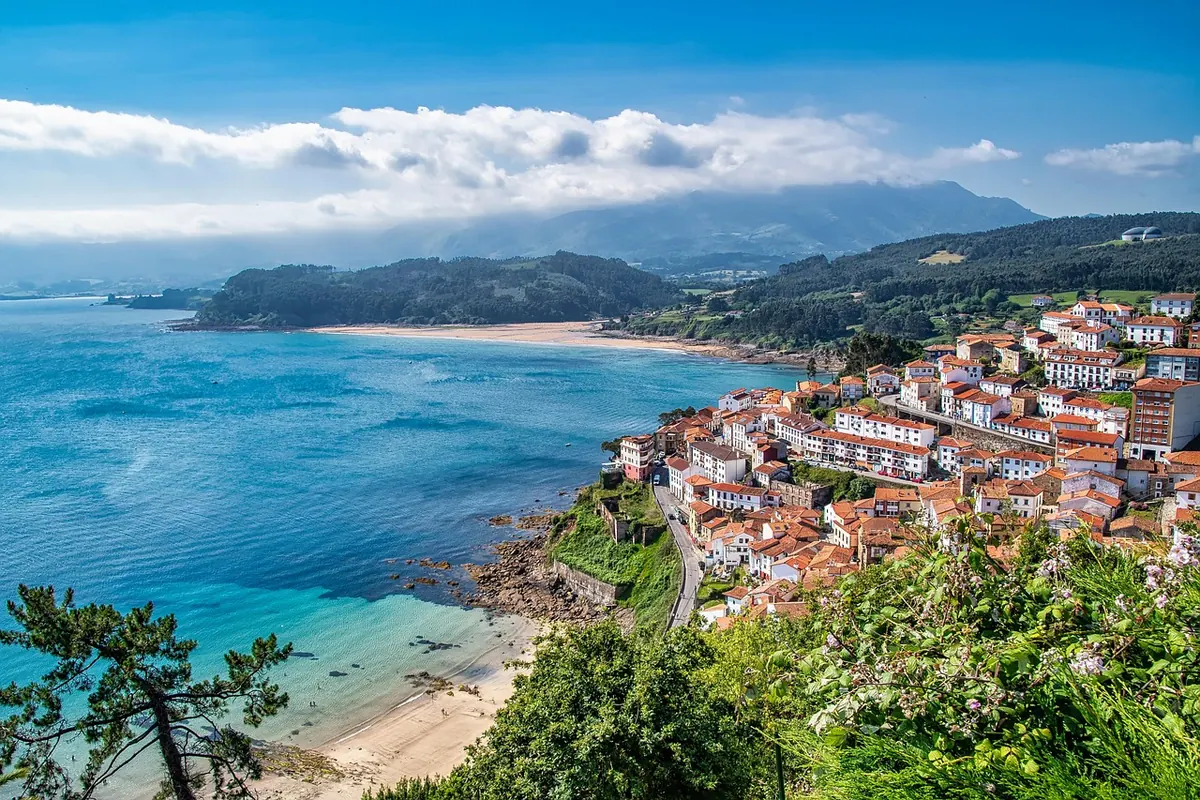
A practical guide to the doorways, stairways, and laundry lines that give Italian village streets their rhythm, and...
October 29, 2026 - Local Stories
Copyright © 2026 Sguardi Del Vicolo. All Right Reserved.