Documenting a Village Festival: A Photo Story Checklist
October 29, 2026 - Local Stories

October 29, 2026 - Local Stories
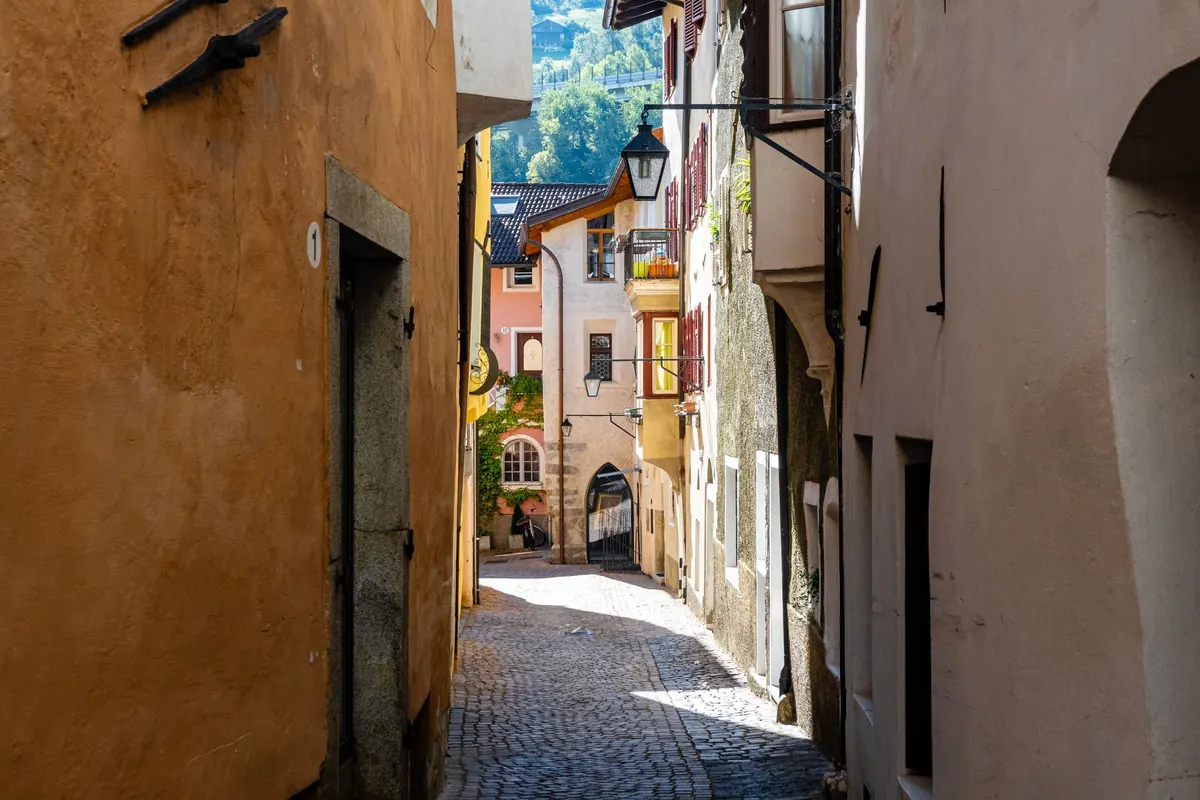
You arrive at a hill village at eleven in the morning, camera set the way it was set in your own city, and everything comes back flat and grey. The walls look chalky. The alleys look like tunnels. The piazza, which seemed so generous from the road below, is half a stop of nothing. It is rarely the village's fault. Villages hand you light in shapes you have not met before: bouncing off ochre plaster, folding into lanes barely two arms wide, dropping behind a roofline at four in the afternoon while the valley beneath is still blazing. Learning to read those shapes is most of the craft.
In a city, light arrives from above and vanishes between buildings eight storeys high. In a village it arrives at an angle and bounces. Two facing walls of lime plaster turn a narrow alley into a light pipe: sun strikes the left wall, the left wall throws warm light onto the right wall, and the right wall throws it back again. The result is a street where almost nothing is in direct sun and yet everything is lit.
Stone holds colour in a way asphalt does not. A shaded corner still has a temperature and a direction, which is why a village in shade looks like a village and a car park in shade looks like a mistake.
The habit worth building is simple. Before you lift the camera, walk the lane once and answer three questions. Which wall is catching sun? Where does the shade edge fall? How long will this last? In streets this narrow, a patch of sun can cross a doorway in ten minutes and be gone for the day.
Villages are easier to read than cities because the rooflines are low and the sun's path is visible from the piazza. The day divides roughly like this:
Midday is not a write-off, by the way. In a whitewashed Puglian lane or a Ligurian carruggio, the hard light becomes the subject: a shaft landing on a step, a chair, a cat, a doorway with everything else in shadow. Shoot the contrast instead of fighting it.
The softbox you left at home has been replaced by a wall. Pale plaster throws light back into a subject from the side, softer and noticeably weaker than direct sun but far kinder than open shade alone. If you are photographing a person in a shaded doorway, stand so the lit wall behind you does the work, and check the colour it throws — a strong ochre wall will warm skin, a grey stone one will cool it.
Watch the plaster itself. Whitewash in the south is close to neutral and gives a clean bounce. Warm yellow and terracotta render in central and northern villages pushes amber into the shade, which is often exactly what you want and sometimes is not. Set white balance from the lit subject rather than the shaded one, or shoot raw and settle it later with a clear head.
Hard, bright, reflective surfaces deserve their own frame: a wet cobble after rain, a polished brass door handle, a window with the piazza folded inside it. Expose for the bright reflection and let the wall around it sit where it lands.
Look up. Shutters, wires, hanging laundry, pergola vines and wrought-iron balconies all throw patterns onto the wall below, and in a village those patterns travel across a lane in a way they never do on a wide boulevard. A vine over a doorway can turn a plain facade into a grid of light and dark for twenty minutes.
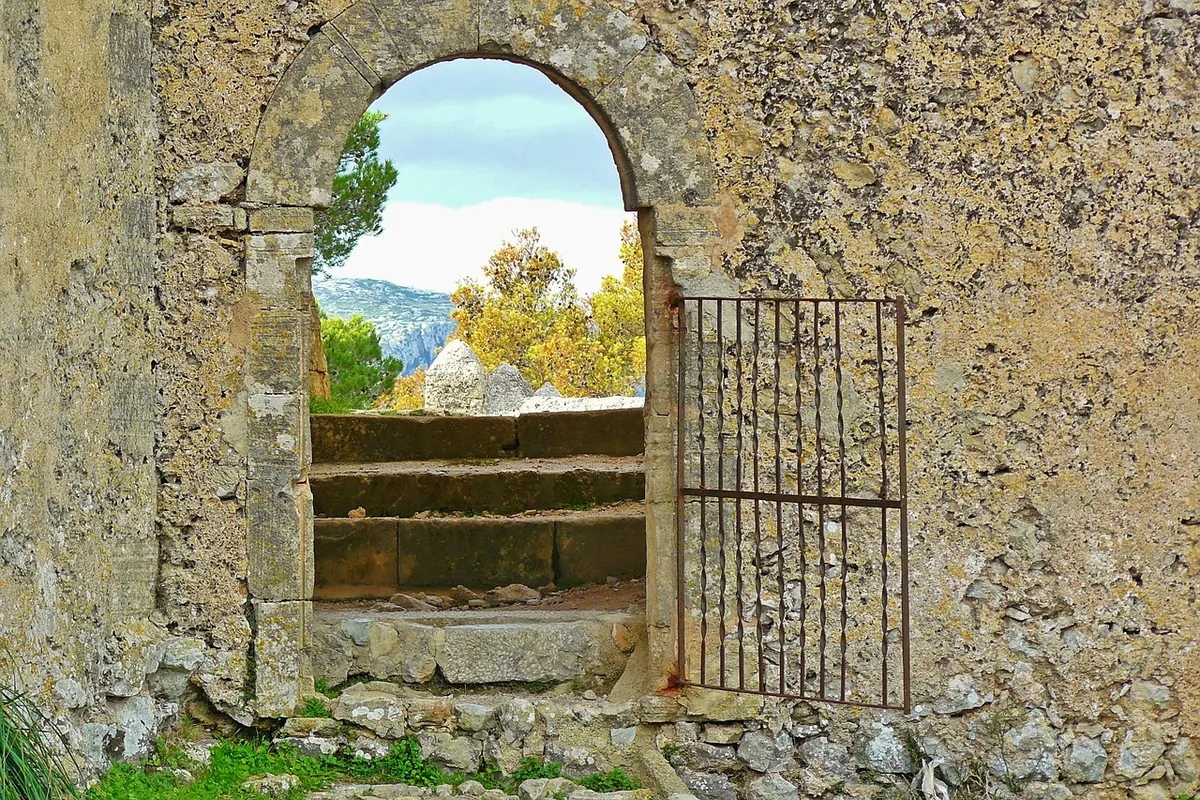
Shadows are also a subject in their own right: the hard diagonal slicing a stone staircase, the dark wedge under an arch, half a piazza in shade while the other half glows. Photograph the edge, not just the lit part. Come back in an hour and the edge will have moved along the wall, and sometimes that movement is the whole picture.
Decide early how much detail you want in the dark. Deep shade in a village tends towards near-black. Lifting it back gives you information but can look muddy and flat; leaving it dark gives you shape. Both are valid, but they are different photographs, and the decision is easier in the field than at the desk.
Pale stone and whitewash clip first, and blown plaster is hard to rescue. Meter for the brightest surface you actually care about, check the histogram rather than the preview, and accept a slightly dark file you can lift later over a bright one you cannot recover. If a doorway is several stops brighter than the room behind it, bracket three frames and choose afterwards.
Some practical defaults for village work: keep aperture around f/5.6 to f/8, since depth of field matters more than peak sharpness and small apertures cost you shutter speed; hold at least 1/60th of a second at wide focal lengths and raise ISO rather than accept blur; use a hood, because sun bouncing off the opposite wall will find your front element; and be sparing with a polariser, which deepens sky but also kills the reflections on wet stone you probably came for.
An overcast day is not a lost day. Flat light is kind to facades, colour reads properly, and you can photograph people in the street without them squinting. Rain is better still — cobbles darken, colours saturate, and the puddles give you a second village upside down. Summer puts the sun almost overhead and shortens the useful hours; spring and autumn stretch them out, and winter gives you low light all day in exchange for a short afternoon. Wind matters too: laundry and vines move, and a still morning is the only time to catch them sharp.
Villages reward patience more than equipment. A single lane, watched for an afternoon, will give you more photographs than a dozen hill towns photographed in a hurry. Treat the light as the second subject in every frame — the walls, the stairs, the laundry, all of it is just something for the light to land on.
A practical checklist for photographing a village festival — from permissions and route scouting to key moments,...
A practical guide to the doorways, stairways, and laundry lines that give Italian village streets their rhythm, and...
October 29, 2026 - Local Stories
Copyright © 2026 Sguardi Del Vicolo. All Right Reserved.